BrightGrid
Choosing solar panels is more complicated than picking the panel with the highest efficiency percentage. For a UK home, you also need to consider available roof space, panel dimensions, warranty terms, degradation, installation quality, inverter compatibility and the total system cost.
Does solar panel efficiency really matter?
Efficiency describes how effectively a panel converts available sunlight into electricity. Higher-efficiency panels can be useful when roof space is limited because you can install more generation capacity in the same physical area.
| Factor | Why it matters |
|---|---|
| Efficiency | Useful when roof space is limited |
| Product warranty | Protects against manufacturing defects |
| Performance warranty | Sets expectations for long-term output |
| Degradation | Affects output over the system lifetime |
| Panel dimensions | Determines how many panels fit on the roof |
| Temperature coefficient | Affects performance as panel temperature changes |
What solar panel warranty should you look for?
Solar panels normally have separate product and performance warranties. The product warranty relates to the panel itself, while the performance warranty describes the expected minimum power output over time.
What is solar panel degradation?
Solar panels gradually lose a small amount of their generating capacity over their lifetime. Manufacturers specify expected degradation through their performance warranties. Comparing degradation assumptions can therefore be more useful than comparing headline efficiency alone.
What does Tier 1 mean?
Tier 1 is commonly used in the solar industry as a classification related primarily to manufacturers and financing criteria. It should not be treated as a universal quality certification for an individual panel. Product warranties, technical specifications and installer quality still need to be assessed.
Are modern solar panels suitable for UK weather?
Yes. Solar panels do not require hot weather to generate electricity. They generate from light, and UK homes can produce useful solar electricity throughout the year, with generation generally much higher during spring and summer.
The panel is only part of the system
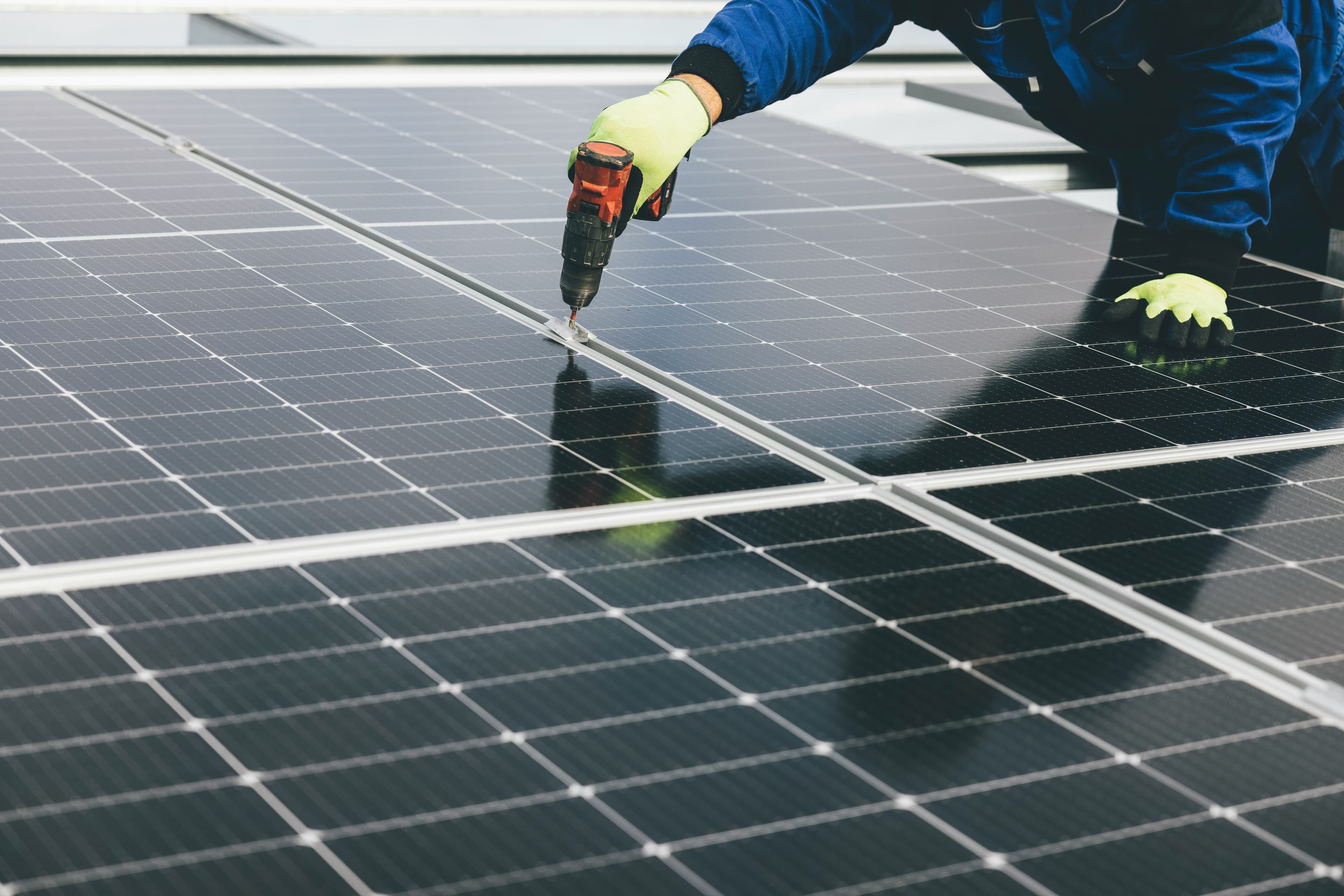
Even excellent panels cannot compensate for poor system design. Roof shading, orientation, inverter selection, cable design, mounting, installation workmanship and commissioning all affect the final result.
Do not compare solar quotes by panel wattage alone
Two quotes can use similar panels but produce different outcomes because of differences in system design, roof layout, inverter selection, shading assumptions and installation quality.
Questions to ask a solar installer
- What exact panel model is being proposed?
- What are the product and performance warranties?
- What annual generation has been modelled?
- What shading assumptions were used?
- What inverter is being paired with the panels?
- Is the system designed for future battery storage?
- What certification and commissioning documentation will I receive?
Get a solar system designed around your roof
We assess roof orientation, usable space, shading, consumption and future energy needs rather than simply maximising panel count.
Explore SolarFrequently asked questions
What are the best solar panels for UK homes?
The best panel depends on your roof, budget, required system size and priorities. Efficiency, warranty, degradation, dimensions and installer quality should all be considered rather than choosing by brand name alone.
Are high-efficiency solar panels worth it?
They can be especially useful where roof space is limited. If you have plenty of usable roof area, the additional cost of higher efficiency should be compared against the additional generation it provides.
How long do solar panels last?
Modern solar panels are designed for long-term operation and commonly come with performance warranties covering multiple decades. Output gradually declines rather than stopping when the warranty expires.
Do solar panels work in cloudy weather?
Yes. Solar panels can generate electricity from diffuse light during cloudy conditions, although output is lower than on bright sunny days.
Sarah Kimani
Systems Designer at BrightGrid Energy