BrightGrid
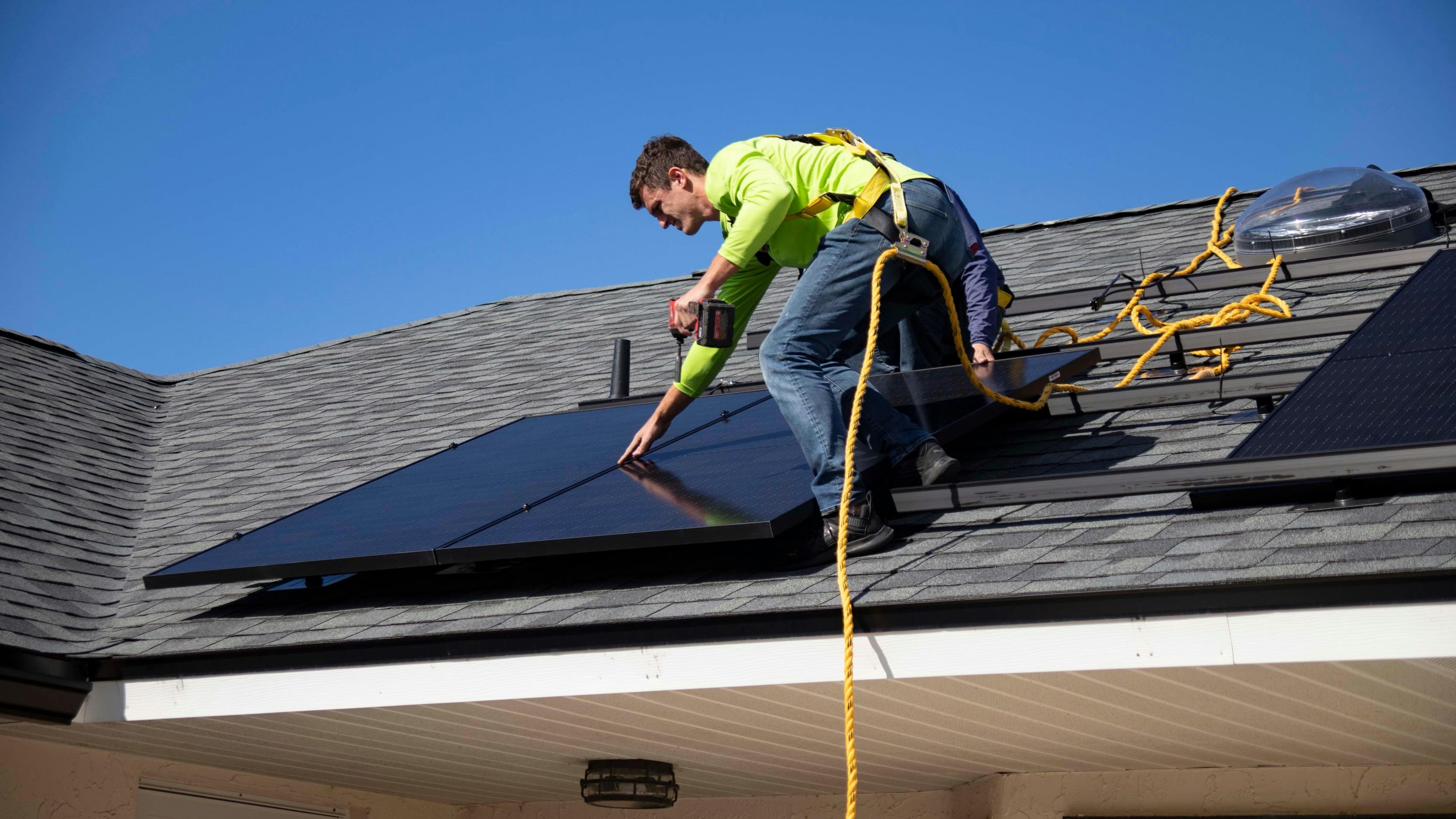
The mounting system is the hardware that connects solar panels to the building. It must be selected for the roof covering, structure, wind conditions and panel layout.
Mounting panels on pitched roofs
Pitched roofs commonly use rails and roof hooks or other approved fixing systems. The exact hardware depends on the roof covering and construction.
Solar panels on slate roofs
Slate roofs require suitable fixing methods because individual slates can be fragile. Installers should use equipment designed for the roof type and take care to avoid unnecessary damage.
Solar panels on flat roofs
Flat-roof systems can use ballasted or mechanically fixed mounting arrangements depending on the building, structural requirements and roof system.
| Roof | Typical consideration |
|---|---|
| Concrete tile | Roof hooks and rails |
| Interlocking tile | Suitable hooks and rails |
| Slate | Specialist fixing approach |
| Metal | Roof-specific mounting system |
| Flat roof | Ballasted or mechanically fixed system |
The mounting system is not an afterthought
Correct roof fixings are essential for long-term stability, weather protection and the structural integrity of the installation.
Get a roof-specific solar design
We design the mounting arrangement around the roof rather than using a one-size-fits-all approach.
Explore SolarFrequently asked questions
Can solar panels be installed on slate roofs?
Yes, but slate roofs generally require appropriate specialist fixing methods and careful installation.
Can solar panels be installed on a flat roof?
Yes. Flat-roof systems can use suitable mounting structures, subject to structural and roof-system considerations.
Do solar mounting systems damage roofs?
Correctly designed systems are intended to work with the roof structure and maintain weather protection. Installation quality is important.
Sarah Kimani
Systems Designer at BrightGrid Energy